
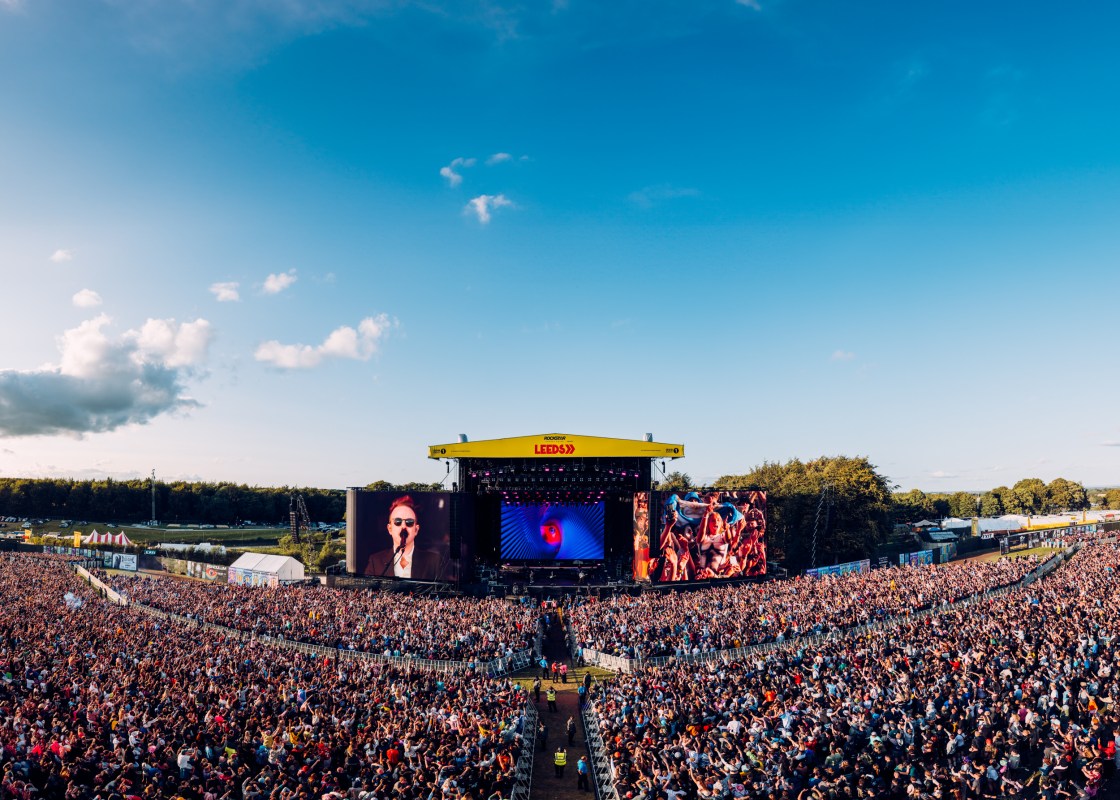
It’s that time again – festival season has all but come to a close for the year, and Reading and Leeds Festival celebrated 2024’s run with their final pyrotechnics, this year, however, one week earlier than usual. As reports circulated of a slew of technical and scheduling issues, they sparked the need to take a deeper look into the state of one of the UK’s biggest and most iconic festivals and what their 2024 editions might mean for the rest of the industry.
It’s no secret that the music industry has been taking a big hit as of late, with festival ticket sales taking a minus of 17% from last year and festivals costing more than ever to attend. It appears as if the sorry state of the festival industry seems to be a painful tale of the greater live music scene in general.
Reading and Leeds Festival is for many in the UK their first overnight festival experience – a rite of passage for UK teenagers, if you may – and famously, it’s not for the faint-hearted. This year’s Leeds campers were greeted by the windy storm Lillian, which, on the first day of live music, caused the festival to close its doors temporarily, with some fans arriving at 11 am and not being allowed entry until 4 pm. Additionally, two of the festival’s biggest stages, the BBC Radio 1 Stage and the newly launched Aux Stage, remained shut for the entire festival weekend, leaving only four active stages in the arena.
Alas, once the festival patrons eventually finally made their way into the arena, jaded, with wind-swept hair, but still excited to see some of the remaining acts that were left to play, most of the weekend went down without a hitch. The Last Dinner Party charmed Leeds with a rendition of ‘Happy Birthday’ and a ceremonial cake candle blowing by one of their members, while at Reading, Liam Gallagher all but teased the reunion of Oasis by praising his brother Noel, and The Prodigy brought a live performance to the new Chevron stage fit for a satanic cult’s Halloween party in arguably one of the greatest live performances both festivals have seen since their heyday of the 90s and 2000s.
Also, we can’t forget to mention the incredible hidden stage in the forest at the campsite at Leeds Festival – a stage so impressive they should give up comparing themselves to the drastically different Reading, and instead market the Leeds edition around their late-night bonanzas. Because, whilst it may not be for everyone, the ability to stay up until six in the morning, partying to DJs at a stage with tens of thousands of people, surrounded by flashing lights, carnival rides and tall oaks, is a fascinating discovery.
However, the weekend’s high peaks could only partially lessen the sour taste left behind by some of the festival’s low points. While the upcoming band Baby Said had their set cancelled after 7 hour’s drive, Lana Del Rey had to compete with the persistent bass crashing over her headline set from the Chevron stage at Reading, and star pop singer Reneé Rapp, unfortunately, became the victim of a stage malfunction as water from the roof poured down directly onto her and her crew, forcing her slot to be cut after about twenty minutes. And whilst this is upsetting for many artists, it’s even more of a struggle for fans, who paid large sums of money in a time of unparalleled financial struggles, to be greeted with sets with terrible sound quality, bands being cancelled or moved to different days, or bouts of musical silence in the arena followed by all the best artists performing at the same time.
In conclusion, it’s clear that the music industry and its fans are in a rough patch right now. With ticket prices skyrocketing and the cost-of-living crisis tightening its grip, attending live festivals is becoming a luxury many can’t afford. This year’s challenges at Reading and Leeds Festival highlight a larger trend affecting the whole live music scene. So, while the frustrations are mounting and fans are shelling out more money than ever, if things don’t shift soon, there’s a real risk that people will start pulling back their support, and we might see more festivals falling by the wayside.
For the music scene to survive and thrive, we need a rethink. Ticket prices need to become more reasonable, and the industry has to focus on ensuring fans get their money’s worth. Otherwise, the vibrant festival culture we all love so much could become a thing of the past and nothing more than a distant memory.
Written by Mason Meyers // photography by Matt Eachus
 GEM Magazine