
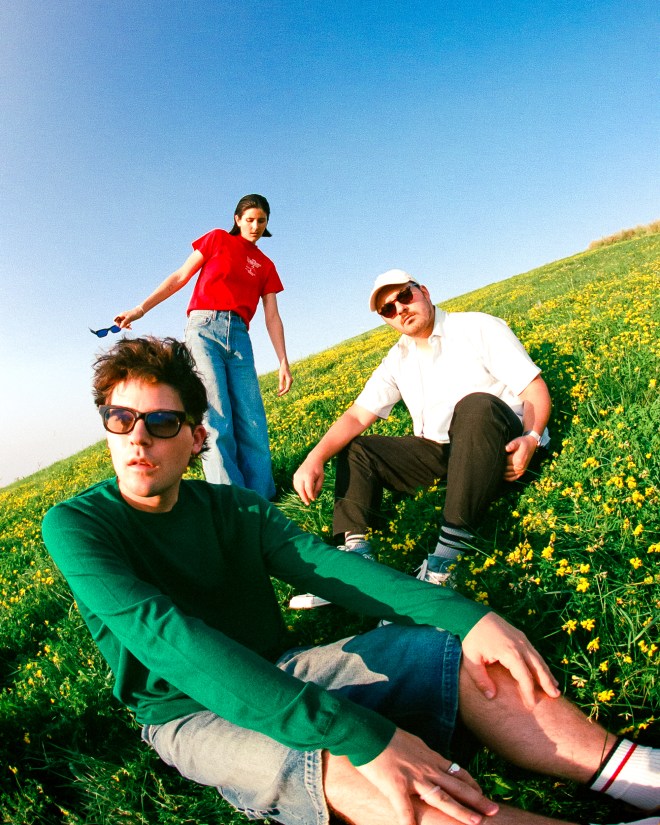
Canadian band Valley – consisting of lead singer Rob Laska, bassist Alex Dimauro, and drummer Karah James – has been releasing music for a decade now. Still, nothing has seemed quite as intimate and personal as their 2024 record ‘Water the Flowers, Pray for a Garden’. The album explores topics of grief and resilience and also marks the group’s first project as a threesome after lead guitarist Michael “Mickey” Brandolino announced his departure last spring. This year, after having successfully finished their American tour, Valley is trekking across the UK and Europe for the first time as a headliner. Ahead of their arrival in London, we sat down with Laska, Dimauro, and James and conversed about their favourite snack food, their band’s serendipitous formation, their bonding experience of songwriting while being locked in a cabin, and so much more.
As Valley are embarking on their first-ever headline show across the UK and Europe, one of the main things we have to find out is what cuisine they are looking forward to trying out the most. “I want to check out Indian food in the UK because apparently, it’s the best place!”, Dimauro instantly blurts out and Laska nods in agreement; Tikka Masala is a national staple after all. “I might go to a restaurant. I was recommended a place called Dishoom, it might be kind of overrated, but a lot of people have told me to go there, it’s an Indian fusion spot,”, Laska says before exclaiming at the other two members and the screen, “We HAVE to have a Greggs sausage roll! And a vegan sausage roll!”. Overall, however, the three seem most excited to explore UK grocery stores, as Laska points out: “We are a big snacky crew.” Drummer James just recently discovered a new favourite: “It’s not really a snack, it’s junk food, but we have something called a ketchup chip. It’s a classic Canadian thing and I always used to think they’re so gross, but then I recently tried it and they are kind of good. So now I’m a ketchup chip girl, which is crazy because it goes against all my morals.”
The three friends not only share a love for a good munch but also for making music – duh! But how exactly did they find each other and how did Valley come to be? “Me and Alex went to high school together and played in bands growing up, and he showed me how to record yourself,”, Laska explains. “We did that for a long time and then the bands fizzled out, and we didn’t want to continue doing this. We ended up taking a lap year, so we stayed back and just figured it out. During that time, we booked a studio to work at and ended up double-booking the studio with Karah and Mickey. We all showed up to the studio at the same time and realised that we were all booked for the same session, and then we just played each other music. It really was just like an alignment of the stars, very serendipitous. It was a big Fleetwood Mac moment, we like to call it.” The name ‘Valley’ stems from their first experiences together as a band, as Laska reminisces. “At that time, we would go play these small town shows when we were a tiny band, had no fans, nothing. And all these really tiny, tiny, tiny towns had “Valley” next to them in the name. So there was some subconscious there, but also, we were craving a one-word band name. We really liked Coldplay or Oasis, for example, just one word and you don’t really know what it means but you attach the meaning to it. Valley had a lot of that, and the symmetry of it too – it looked pretty.”
Laska, Dimauro, and James all individually discovered their passion for music very early on in their lives. “I think music is similar to smell when it triggers that weird visual memory for people. It can take them right back to the moment when it happened,”, Dimauro phrases gracefully before telling us more about a significant period in his life. “There was this one time my mom got in a car accident and we had to borrow my grandparents’ really shitty old van, and I remember hearing ABBA and a bunch of other firsts in this one specific vehicle.” Laska chimes in, “It’s always the first time you hear a classic song, it’s such a crazy, visceral experience. I had the same thing with my parents when my dad showed me ELO for the first time. It was digitally produced and had string arrangements, tons of harmonies, and all these layers happening, but they were still really well-written songs. I remember hearing that for the first time and being amazed by how it made me feel but not knowing why, it was really special”. James remembers that she was “’probably seven years old” when she was introduced to West African drumming. “I was really interested in rhythm and African drumming music at first because it was easy for me to digest and also just so mesmerising. I’m still fascinated with it now. That was my first introduction to it and I was so settled in that sound that I was like, “I’m a part of this and I can’t even play on the drums”, but I learned.”
Do they feel like the music they grew up on inspired the music they make now? “Yeah, absolutely!”, Laska calls out and elaborates, “I feel like more now than ever”. “Making this album was much more like going back to the things that raised us versus the things that I think we thought people expected from us, which is a big difference. I remember with ’Water the Flowers, Pray for a Garden’, we made a playlist of all our favourite songs. It was packed with tracks we heard ranging from five years old to high school to college and even stuff that got us through our early 20s. We really cherry-picked the core feelings and things that we love listening to, which we hadn’t done as much in the past but now more than ever, I would say. In the last year, we have been really dialling in on that more than with prior releases.”
Overall, their influences aren’t rooted in their home country or the Canadian artists that came into the international scene before them. “The influences have always come from the outside, which seems to happen a lot, I think, for most people. It’s always like, the grass is greener on the other side,”, Laska clarifies truthfully. “I didn’t grow up on Canadian music, from people deemed Canadian. I had two immigrant parents who didn’t show me the stuff that bred certain sounds. I think we had a little bit of blinders up to the Canadian music coming in, in a healthy way where we didn’t think we had to create a certain type of sound. But now it’s cool going back, now that we have something that’s defined and we know what we like and what we don’t like. It’s cool to go back and listen to that stuff because there’s so much amazing music from our country. I never went through a Rush phase until recently. I put some of it on to do my research and study it because I never got that exposure growing up.”
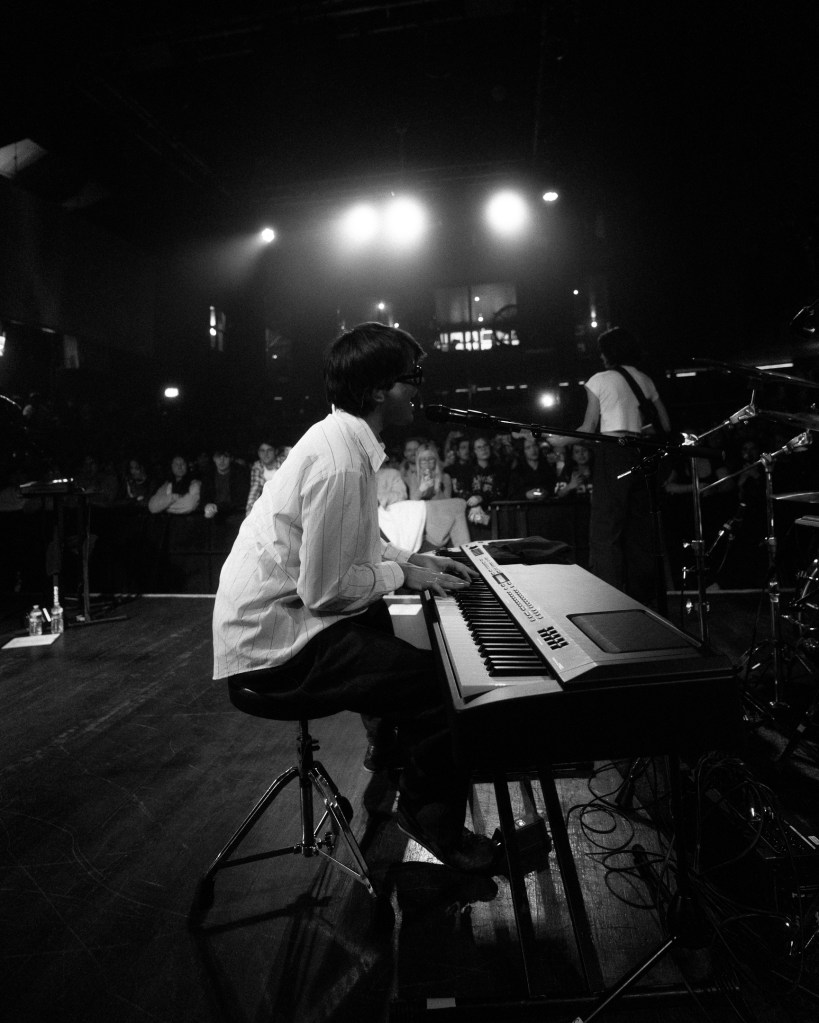
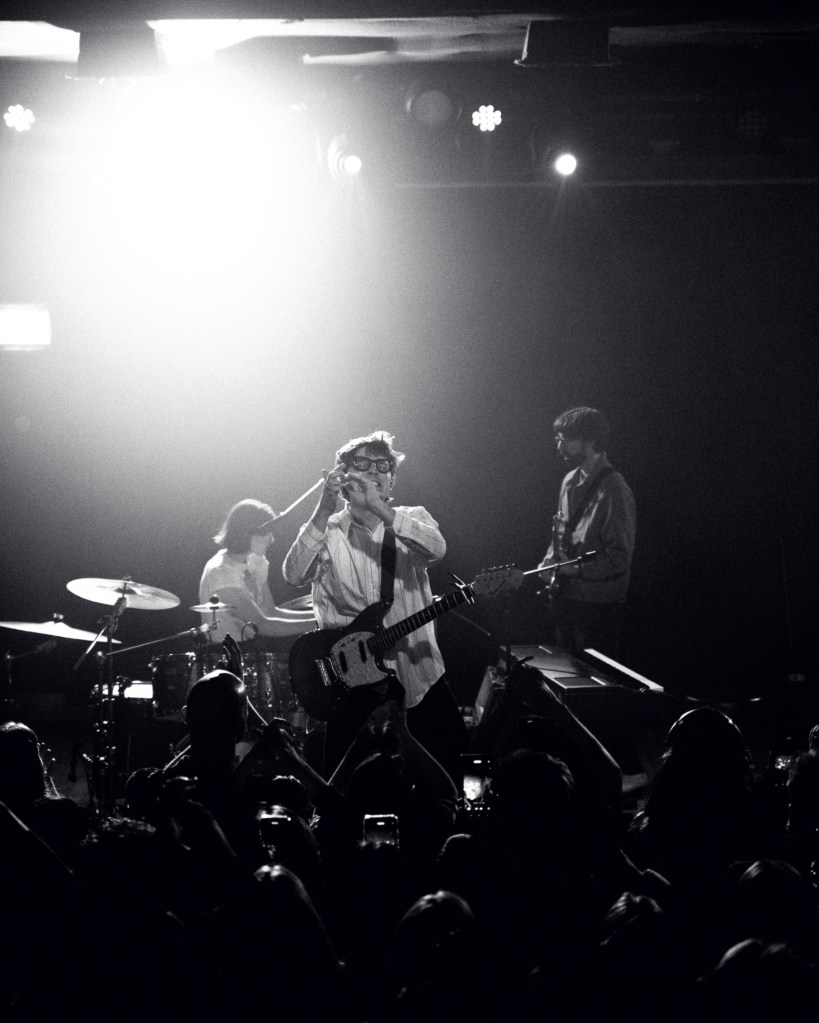

When we ask them to describe their own musical identity as a band to someone who has never listened to them before, they all take a moment to ponder before James speaks up: “Friends in a band!”. She laughs and resumes, “Whenever I describe our current music to people, I always say it’s band music, and I hope people understand that. It’s drums, some synths piano, bass, and vocals, and there’s not much else. And I feel like there’s a certain sound that bands have because they all want to play their own parts and their own instruments. So I’d say it’s “friends playing in a room together”, and hopefully it comes across like that. Less of a genre and more like a feeling we get, because we really did play the songs in a room together. And there’s lots of mistakes and full takes and stuff, and that is the thing that we want to convey.” Laska declares that he realised it might not be their question to answer after all: “We leave it for other people these days, whatever people identify it as that’s cool because that’s what speaks to you.”
Their most recent album ‘Water the Flowers, Pray for a Garden’ was “literally made in a month in a cabin”, where the three-piece was locked away and experiencing a stream of consciousness. Dimauro shares that the inspiration for their songwriting comes from personal experiences as well as made-up scenarios. “The thing is, I think when you make up a story, it can sometimes come from an unconscious experience. We have songs on this last record that started not necessarily being something that was a direct incident, but that emotionally connect to something that one or all of us have been through – ‘Bass Player’s Brother’ being one of those tracks. It’s not necessarily about the bass player’s brother, but it evokes-“. “It still feels honest, for whatever reason,”, Laska finishes for him. James further argues, “An author of a book or a screenplay writer, they don’t necessarily write about things that pop into their minds but they’re inspired by storytelling. And I think as long as that inspires us, then we tell it. But we’ve definitely written songs in the past that are about nothing”. All three of them laugh, while Laska and Dimauro agree with a nod. “So we’ve learned that’s not satisfying, it’s not fulfilling.”
The title of their 2024 release was agreed on before Valley even started working on the album. “The only other time we’ve really had that was with our first record, where we had this word and this thing to anchor things,”, Laska emphasises. “‘Water the Flowers, Pray for a Garden’ in itself speaks to a lot, it’s about this blind hope and positive outlook in the dark times of us being a band and going through so much, personally and interpersonally, and that was always there as an anchor.” Unsurprisingly, this led to a lot of the songs coming naturally to the three of them, as Laska highlights the song ‘Mosquito’. “I think our brains had that title in the back of our minds and so we just started expressing ourselves through a lot of imagery that made sense. It was a nice way of writing because we knew what the statement of the album was, so all we had to do was add those little ornaments to the tree. But we knew the textures, we knew that the sounds all came from that title.”
Valley started with four members before guitarist Michael “Mickey” Brandolino left the band in March 2024 – did this mean a change in approach to the making of their record as a trio. “Decision-making is a little easier but that’s just a practical thing, like, less amount of people, the fewer the compromises,”, Laska keeps it simple. But along with their band dynamic, it’s also their sound that they believe has changed a lot over the past 10 years. “And I’m happy it has!”, Laska amplifies. “And that we’ve had the liberty and the freedom to, like, drive the car wherever we want to drive it. But I definitely feel like with this new record, we’ve parked it a little bit. Finally, we reset and presented a world and something that is so cohesive and feels so right to us that we want to park it here and build off of it. I think we got a little exhausted driving the car to a lot of different places, which you can do at the beginning of your career because you’re just creating in the way you consume, as people call it. So you’re essentially just trying to be your favourite band and once you realise that doesn’t work, you’re like, “Okay, how do I be my band?” and that’s where I think we landed with this record. We’re not trying to be anyone else other than ourselves, which I think you can hear”, he smiles assuringly to himself.
Having just finished the North American part of their headline tour, Laska expresses how grateful they are as a trio to “be back and touring after having the longer break while making an album”. “There are people who we’ve seen at the front of the barricade for years and they are still there, but now there are more people with them. It was a really amazing and cool experience to finally bring an album to the stage that we feel is so, so, so a definition of who we are, and the fact that it translated and worked with the older music as well. Finally, we can see how far we’ve come.” Their pre-show rituals include “being crazy, doing vocal harmonies” and a half-and-half of sparkling water and Red Bull – “to get us a little hydrated but without all the sugar”. “We also do this thing called cinnamon roll, where we put all our hands together and then shout “Cinnamon roll”. It’s very silly, but it’s been passed down from tons of bands in Canada. And then we do a salute to whatever comes to mind or something that happened that day.”
To the question of whether the three friends have already experienced a “We made it!”-moment, we earn a wave of chuckles from Laska, Dimauro, and James. “Still trying!”, James laughs, “It’s not like we’ve been to the Grammys”. Laska interprets their successes so far more as “tiny glimpses” than one big moment – “like when we went to Asia”. “Or when we get a song on the radio,”, James adds. “Or when we do a daytime TV and our parents get to record it!”, Dimauro grins. “I also saw one of our songs play at a hockey game recently, very Canadian!”
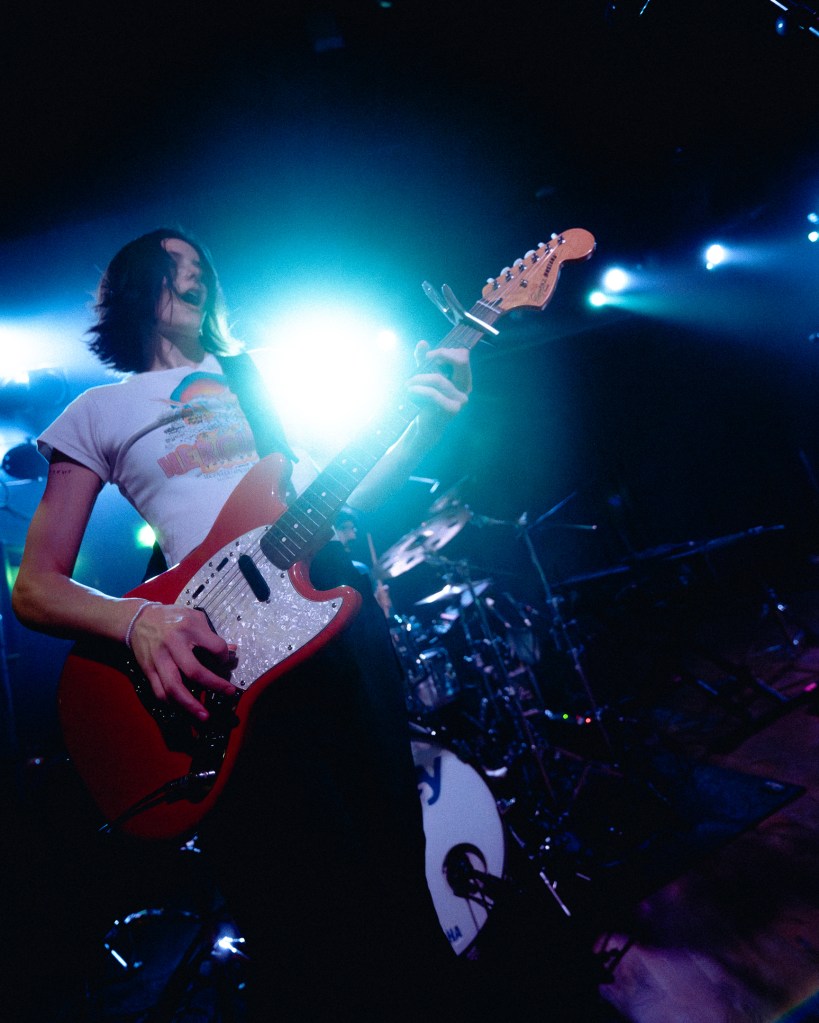
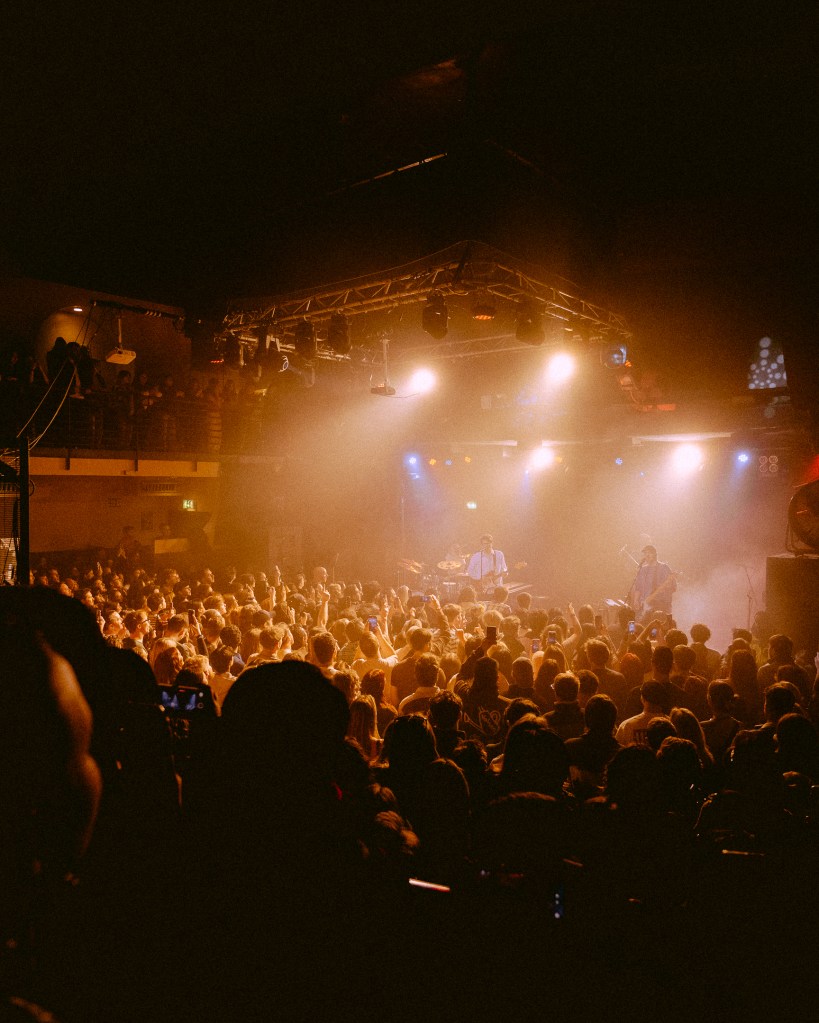

And with that, we have to wave goodbye to three smiling faces on our screens – but we don’t have to wait too long to see them again, this time in the flesh and in the packed room at Scala in the middle of the UK capital. On stage, their sound is much rockier live than on their recordings, which adds a certain 90s feel to their show – and the audience very much looks like it too. Laska’s smooth voice, which is barely differentiable from LANY’s Paul Klein if you close your eyes, provides an exciting contrast to James’ heavy drums and guitar. In-between songs, distorted melodies and phone calls serve as transitions that match the whole show perfectly, while Laska expresses his and the whole band’s gratitude to their excited crowd multiple times. “This is very surreal! It’s our first time on this side of the world. We are so far from home but your faces seem so familiar!”, he exclaims halfway through the concert during an intimate moment that highlights the admiration between the fans and the group. While most songs on the setlist stem from their latest album, some older fan-favourites such as the bouncy ‘Like 1999’ and ‘hiccup’ also get their moments to shine, much to the thrill of their screaming fans. The finale of Valley’s first-ever London gig comes with the soft acoustic strokes of ‘Bop Ba’, with lead singer Laska taking a detour from the stage right into the middle of the crowd, along with his guitar and microphone stand. “Thank you so much for waiting so long, we love you forever and we promise, we are gonna be back,”, he assures the audience before the group runs/gives each other piggyback rides backstage.
Valley’s love for each other, for music, for creating, for playing their songs live, and, of course, for their fans, is undeniable and the most important asset a band can have to achieve remarkable international success. We hope the next couple of years will offer even more “tiny glimpses” of victory to the Canadian trio, and we are convinced that even though their car is finally safely parked, they are definitely en route to the Grammys.
Written by Vicky Madzak // photography by Becca Hamel
 GEM Magazine