
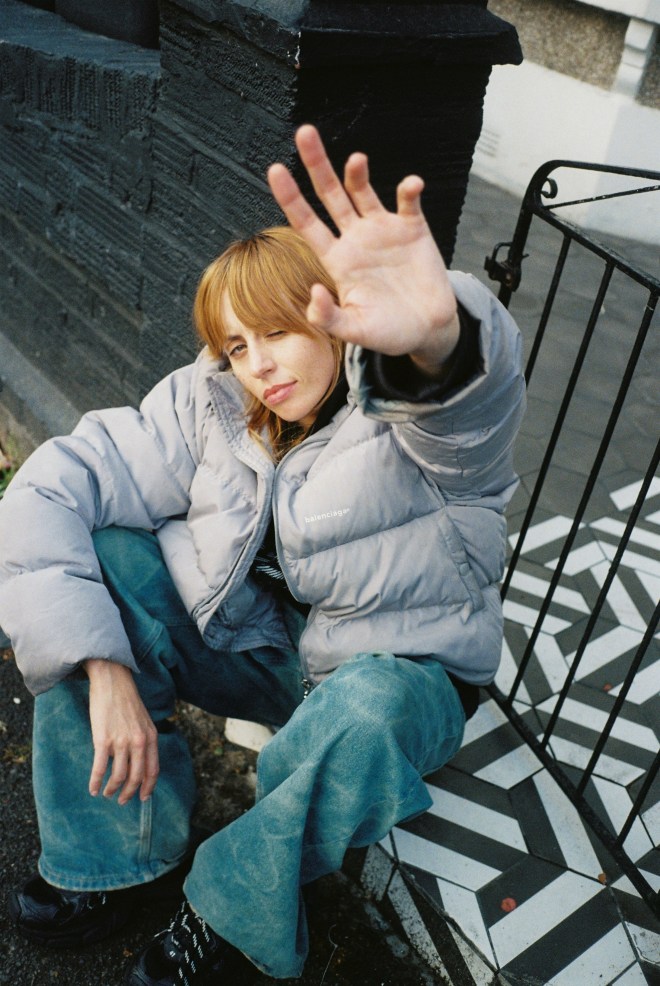
With each work, Australian folktronica singer-songwriter, Gordi – aka Dr Sophie Payten – masterfully crafts a distinct identity, both in sound and emotion. In the backdrop of her gentle vocals, she melds moody acoustics and electronics which offer her listeners a refuge into her tender and emotionally vibrant world. Gordi tells us to picture plasticine – the malleable, resilient substance that can’t be easily broken, but instead, reshaped. Like the metaphor she’s chosen for her third album, her music has been moulded around all the lifetimes she’s lived. From the farm where she began playing piano as a child, to the stages and classrooms she alternated between during medical school, to the hospitals where she worked as a doctor during the COVID-19 pandemic, music refused to release its hold on Gordi. In the midst of juggling her musical and medical careers, Gordi has sold out shows around Australia, the US and the UK, collaborated with fellow Australian, Troye Sivan, and toured with artists such as Bon Iver, Fleet Foxes, Sam Smith, Of Monsters And Men, The Tallest Man on Earth, and Foster The People. Now a full-time touring musician and one of Australia’s award-winning rising stars, Gordi invites us to look inward with her third album, ‘Like Plasticine’.
It started with her mother. As the daughter of a piano teacher, music was a way for the two of them to connect. While playing piano overlooking the rural landscape that surrounded their family farm, music’s hold on her would only grow. Songwriting became a refuge for Gordi as a teenager, and she remembers her first tastes of performing fondly.
For many artists, pursuing a music career often means balancing their passion with a non-music-related job. For Gordi, things were a little different. She’d never wanted to be a professional musician to begin with. And so, the career choice she made wasn’t to merely pay the bills while chasing the music dream – she had decided to become a doctor.
It was then, while deeply engulfed in medical school, that music unexpectedly took up significant space in her life. It started with the craving for performance. Then, it turned into playing gigs around Sydney, slowly catching the attention of listeners through the years. “After a couple of years of that, I found my songwriting was really improving. I finally wrote this song, I sent it around to a few friends and family, and I felt like this was sort of my shot at getting what was a hobby and a passion to maybe start having the embers of a career,”, Gordi shares. “I saved up some money and I went into a real live studio, and recorded this song called ‘Nothing’s As It Seems’. It got on the radio in Australia, and that was the turning point for what was a very, very slowly developing snowball over a number of years.”
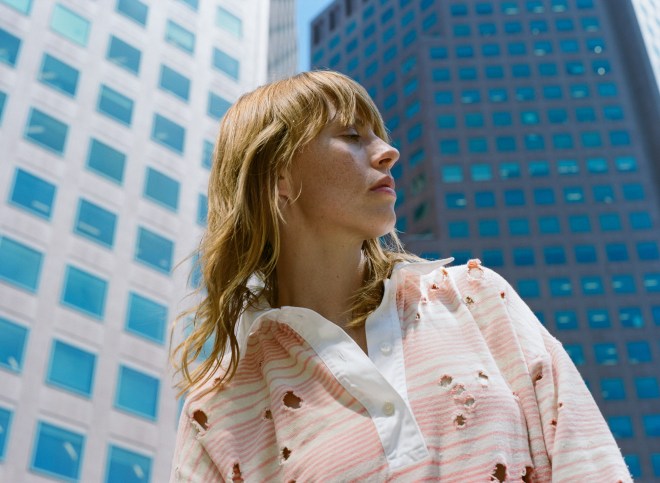
This chapter in Gordi’s life was one she describes as a six-year adrenaline-filled period when sleep was rare. As she got further into her medical degree, her music career was also taking off. She laughs as she recalls a weekend that began with opening for Icelandic artist Ásgeir, and ended with her rushing to the hospital the next morning: “I finished the show [in Perth], got a taxi to the airport, got on a red eye flight back to Sydney. I left my car at the airport, got in, changed my clothes, drove to the hospital, and I got there in time for 8am rounds.”
When comparing the jarring transition from the hospital to the stage, Gordi describes a sense of hiding for both. “In the hospital, as a medical person, you’re sort of a vessel. You’re receiving someone’s story. You’re this figure in the patient’s life where you’re transmitting news to them so that they gain an understanding of what’s happening to them. And as an artist, you’re the person offering up your experiences on a platter for everyone to witness,”, Gordi says. “My second record was a lot about my journey to queerness, and there are some really private, personal stories there. Even though you are putting your life on a plate as an artist, I think once you’ve told that story out loud to all these people, there’s this feeling like you can hold it all at arm’s length. I think that sort of happened in the hospital as well. There’s this strange intersection of private and detached.”
Eventually, Gordi reached a point where she no longer wanted to balance her two careers. Shortly after she released her 2020 sophomore album, ‘Our Two Skins’, she decided to do music full-time and quit her job as a resident junior doctor. But as the pandemic hit Australia, she found herself back on-call in the hospital as the industry shut down. This period was when the seeds of her third album, ‘Like Plasticine’, were first planted. “I was working in the hospital all through COVID, and obviously, as a songwriter, I try to just write what I know, what I’m experiencing. It was difficult because all the stories I was being presented with – none of them were mine. They were all these private experiences – confidential experiences, more importantly – of patients. But that was my everyday, and so, it was strange to then take seeds of those stories with my own experience of this global catastrophe and try to put it into a song,”, the artist shares.
For Gordi, the optimism in ‘Like Plasticine’ came as a surprise. She notes the heavy themes in the record – the grief she witnessed during the pandemic, the sadness that comes with growing up, the pain of nostalgia and coming to terms with people and experiences that have come and gone. “When I think about those things, I don’t feel optimistic. I feel sad. But I think there’s something about the beauty of songwriting where the emotions that come up in that process can stun the person who’s creating it. That was the case for me,”, she exclaims. “I think that the pandemic years were so brutal for everyone in different ways, and I think deep down, I was like, ‘I can’t bring myself to make a record that’s dark and depressing about this dark and depressing time. I think I need some optimism in this.’ So fortunately, it sort of reared its head at some point.”
She paints a picture of some of the integral moments that shaped ‘Like Plasticine’. In one, she paces around a performance space in Sydney by herself, listening to a series of loops on the speakers while she pieces together lines from her songwriting notebooks. In another, she sits at a friend’s kitchen counter in New York and writes a poem that would become her favourite song on the album, ‘GD (Goddamn)’ – a dreamy, memory-like song recorded entirely on her iPhone: “I was trying to get across this feeling of the devastation of time. That one is very special to me.”
While ‘Like Plasticine’ was shaped by the grief and brutality of the pandemic years, Gordi describes how the album is really an ode to both the agony and ecstasy of change. When asked about what she hopes listeners will take from the record, the singer says it’s all in the title of the LP for her. The changes and reshaping that plasticine undergoes are a parallel she wants listeners to reflect on within themselves. “I think everyone has about three or four moments in life that really transformed them, maybe, and what I want people to take away from it is thinking, ‘For better or for worse, what are those critical moments in my life that made me who I am?’ I think we can all get something from reflecting on that, and I found it to be a really powerful sentiment.”
Gordi’s new album ‘Like Plasticine’ is out now.
Written by Bernice Santos // photography by Bianca Evans & James Robinson

